Mid-Term Rental in Barcelona by Neighbourhood: Eixample, Gràcia, Sants and Poblenou
- Barcelona
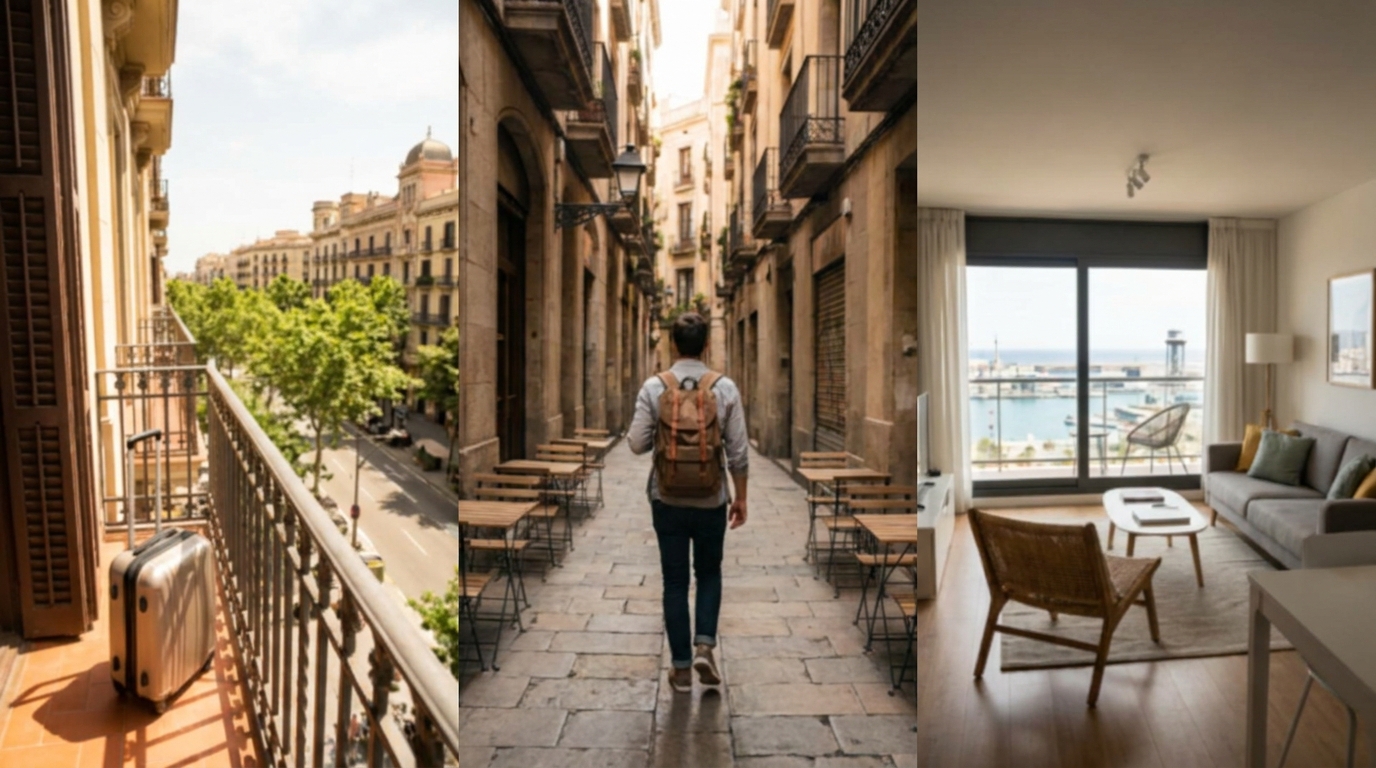
Picking a neighbourhood for a weekend break is easy. Picking one to live in for three, six or nine months is different: the corner shop matters, so does the noise at 11pm, how long your commute is, and whether the furnished flat has a decent spot to work from. This guide compares four Barcelona neighbourhoods that are in high demand for mid-term rentals and tells you who each one works for.
Know how many months you're staying but not which neighbourhood? Tell us your routine (work, budget, whether you're coming with family) and we'll suggest furnished apartments in the areas that fit best. 👉 See furnished apartments by neighbourhood
How to choose a neighbourhood for a multi-month stay
Before looking at flats, rank your priorities:
- Transport links to wherever you'll work or study every day
- A realistic monthly budget, utilities included
- Atmosphere: do you want quiet residential life or to be in the thick of it?
- Daily services: market, pharmacy, gym, coworking
- Noise: the liveliest areas at night don't always rest
With that clear, here's how the four neighbourhoods behave.
Eixample: the most central and best connected
The Eixample is the grid of square blocks at the heart of Barcelona. It's the default choice for anyone who wants to be near everything without worrying about transport: a metro stop every few streets, late-opening pharmacies, large supermarkets and coworking spaces on almost every block.
- Who it suits: relocated professionals, executives, first-timers who want a safe location bet.
- Atmosphere: urban, commercial, busy by day and calmer on the inner streets.
- Mid-term rental price: the highest in this comparison, especially in the Dreta de l'Eixample.
- Worth knowing: flats facing the big avenues (Aragó, Gran Via) get more traffic noise; look for units on inner streets or facing the block courtyard.
🏙️ Seasonal apartments in the Eixample
Gràcia: village feel and a local crowd
Gràcia was once an independent town and still feels like one: small squares with terraces, pedestrian streets, neighbourhood shops and a very active community. It particularly appeals to people staying a long stretch who want to feel they live somewhere, not that they're passing through.
- Who it suits: digital nomads, creatives, young couples, stays of 4 months or more.
- Atmosphere: calm and sociable at the same time; very lively during the Festa Major in August.
- Mid-term rental price: mid-range; a little below the central Eixample.
- Worth knowing: many buildings are old with no lift, so check the floor. Metro coverage is slightly thinner than in the Eixample.
Compare two or three neighbourhoods before deciding We'll show you equivalent apartments in different areas so you can see the real difference in price and atmosphere. 👉 Ask for a neighbourhood comparison
Sants: well connected and better value
Sants is a practical, working neighbourhood with the city's main train station (high-speed and regional lines) and several metro lines. It's the sensible choice for anyone who wants good connections without paying central prices.
- Who it suits: postgraduate students, people who travel outside Barcelona often, tighter budgets.
- Atmosphere: authentic, commercial, with no major tourist draws, which means streets that are lived in by residents.
- Mid-term rental price: the most contained in this comparison for equivalent flats.
- Worth knowing: the area right by the station is more impersonal; a couple of streets away it improves a lot.
Poblenou: modern, near the beach and the tech district
Poblenou is the former industrial neighbourhood turned tech-office hub, with lofts and tree-lined avenues ten minutes from the sea. It combines a local feel with new infrastructure.
- Who it suits: people working in the 22@ district or at tech companies, families who want space and beach, remote-work stays.
- Atmosphere: relaxed, bright, with the Rambla del Poblenou as its social spine.
- Mid-term rental price: mid-range; higher in the new blocks by the beach.
- Worth knowing: some areas still in transition have fewer local shops; focus on the Rambla del Poblenou and Llull area.
Quick comparison
| Neighbourhood | Best for | Price level | Strong point |
|---|---|---|---|
| Eixample | Professionals, first stay | High | Connections and services |
| Gràcia | Nomads, long stays | Medium | Local atmosphere |
| Sants | Tight budget, frequent travellers | Medium-low | Transport and price |
| Poblenou | Tech, families, beach | Medium | Space and quality of life |
What to check in the flat, whatever the neighbourhood
- Orientation and noise: ask whether it faces a main street or an inner one
- A real workspace: a desk and chair, not just the kitchen counter
- Heating and air conditioning, depending on when you're staying
- Lift and floor if you travel with big suitcases or with kids
- Which utilities are included in the rent
Frequently asked questions
Which neighbourhood is cheapest for a mid-term rental in Barcelona? Among these four, Sants offers the most contained prices for comparable apartments, followed by parts of Gràcia and Poblenou away from the most sought-after spots.
Where should I stay if I work in the 22@ district? Poblenou is the most practical for proximity. As a well-connected alternative, the eastern Eixample or Fort Pienc.
Is Gràcia noisy? Generally it's quiet, except during the week of the Festa Major de Gràcia (mid-August), when the decorated streets stay busy until late.
Can I switch neighbourhoods mid-stay? If there's availability in another apartment in the portfolio, it can be considered. Let us know in advance.
Find your seasonal apartment in the right neighbourhood
Tell us what your day-to-day in Barcelona looks like and we'll suggest furnished flats in the areas that genuinely fit.